Lorem ipsum dolor sit amet, consetetur sadipscing elitr, sed diam nonumy eirmod tempor invidunt ut labore et dolore magna aliquyam erat, sed diam voluptua. At vero eos et accusam et justo duo dolores et ea rebum. Stet clita kasd gubergren, no sea takimata sanctus est Lorem ipsum dolor sit amet. Lorem ipsum dolor sit amet, consetetur sadipscing elitr, sed diam nonumy eirmod tempor invidunt ut labore et dolore magna aliquyam erat, sed diam voluptua. At vero eos et accusam et justo duo dolores et ea rebum. Stet clita kasd gubergren, no sea takimata sanctus est Lorem ipsum dolor sit amet. Lorem ipsum dolor sit amet, consetetur sadipscing elitr, sed diam nonumy eirmod tempor invidunt ut labore et dolore magna aliquyam erat, sed diam voluptua. At vero eos et accusam et justo duo dolores et ea rebum. Stet clita kasd gubergren, no sea takimata sanctus est Lorem ipsum dolor sit amet. Lorem ipsum dolor sit amet, consetetur sadipscing elitr, sed diam nonumy eirmod tempor invidunt ut labore et dolore magna aliquyam erat, sed diam voluptua. At vero eos et accusam et justo duo dolores

Kein Podcast gefunden

Headline H3

Lorem ipsum dolor sit amet, consetetur sadipscing elitr, sed diam nonumy eirmod tempor invidunt ut labore et dolore magna aliquyam erat, sed diam voluptua. At vero eos et accusam et justo duo dolores et ea rebum. Stet clita kasd gubergren, no sea takimata sanctus est Lorem ipsum dolor sit amet. Lorem ipsum dolor sit amet, consetetur sadipscing elitr, sed diam nonumy eirmod tempor invidunt ut labore et dolore magna aliquyam erat, sed diam voluptua.

Headline H3

Lorem ipsum dolor sit amet, consetetur sadipscing elitr, sed diam nonumy eirmod tempor invidunt ut labore et dolore magna aliquyam erat, sed diam voluptua. At vero eos et accusam et justo duo dolores et ea rebum. Stet clita kasd gubergren, no sea takimata sanctus est Lorem ipsum dolor sit amet. Lorem ipsum dolor sit amet, consetetur sadipscing elitr, sed diam nonumy eirmod tempor invidunt ut labore et dolore magna aliquyam erat, sed diam voluptua. At vero eos et accusam et justo duo dolores et ea rebum. Stet clita kasd gubergren, no sea takimata sanctus est Lorem ipsum dolor sit amet.

Modul leer
Modul leer
Modul leer

Headline

DBB_AST26_April_Mannheim_0504_TURJPN_Berger_1

AST 2026: Spielberichte von Tag zwei

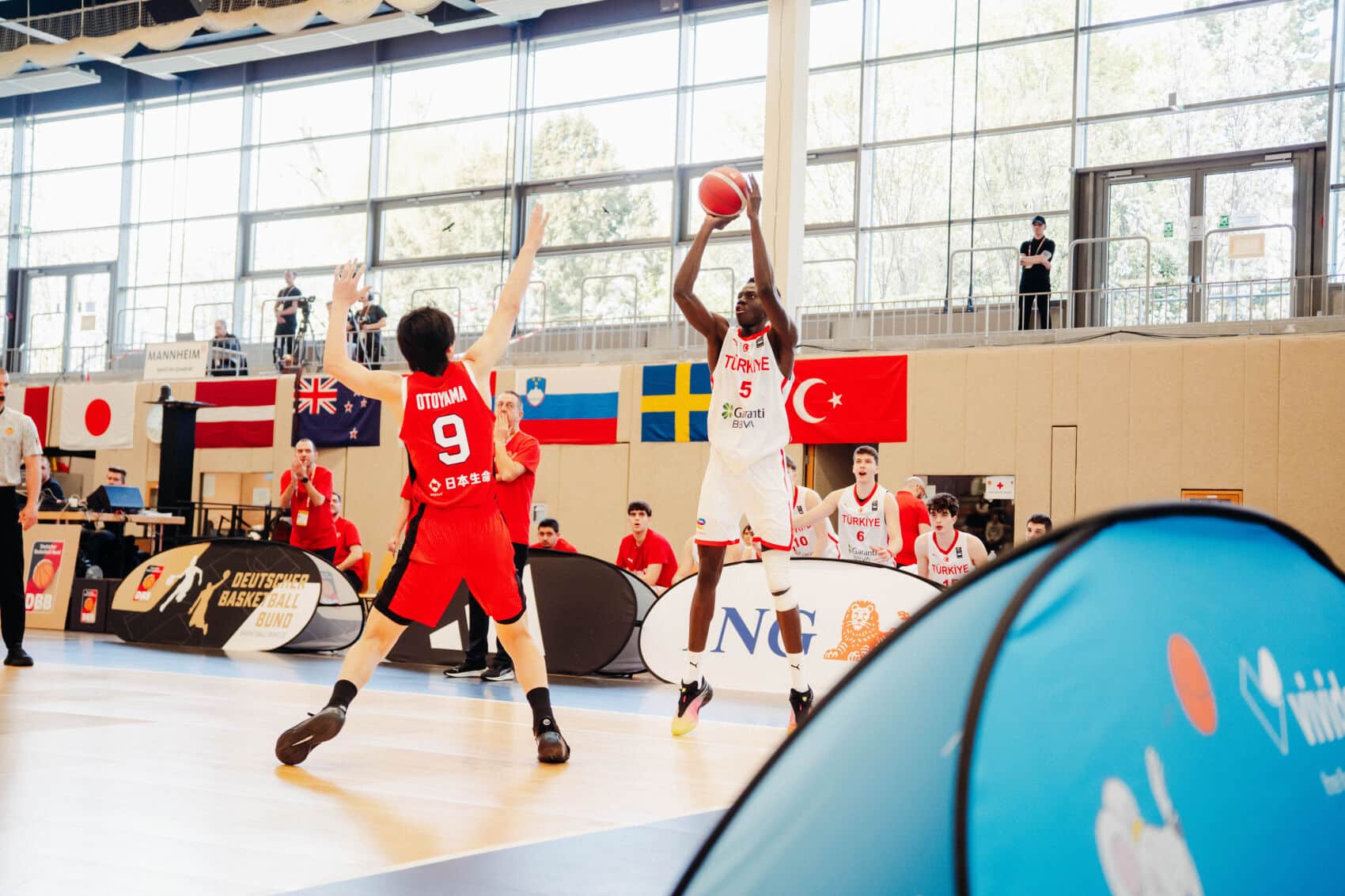
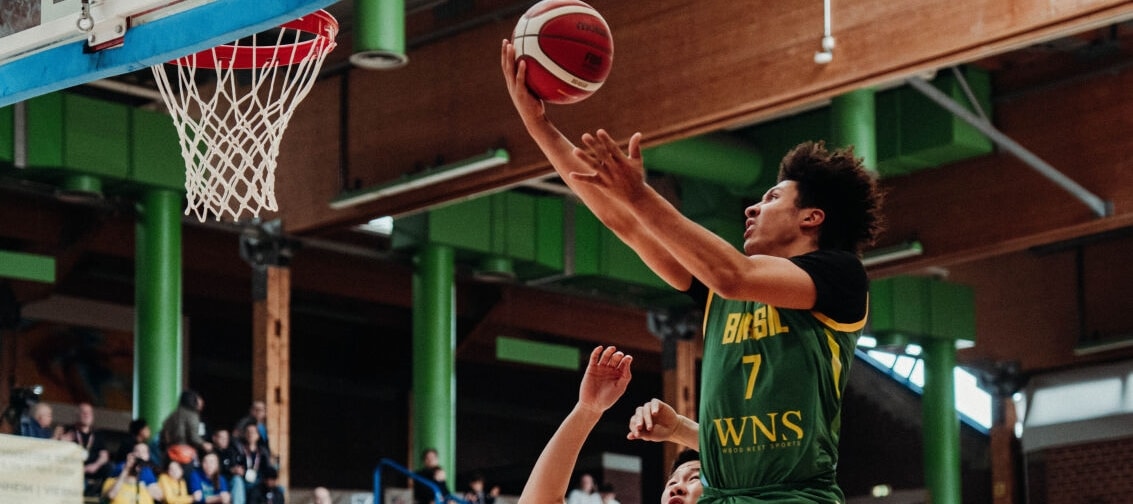
Gruppe/Group A Türkiye – Japan 78:66 (19:20, 30:10, 17:21, 12:15) Die Partie der beiden am ersten Tag sieglosen Teams begann schleppend. Japan versuchte es unentwegt, direkt unter dem gegnerischen Korb zu Erfolg zu kommen und hatte bis zum 10:10 durchaus Erfolg damit (6.). In den Folgeminuten übernahmen die Asiaten sogar die Führung (14:20). Doch anschließend wachten die Türken auf und legten 14 unbeantwortete Punkte aufs Parkett. Von da an kam die Türkei problemlos mit der japanischen Pressverteidigung zurecht und baute die Führung kontinuierlich aus. So sah es zur Pause eindeutig nach einem türkischen Erfolg aus (49:30). Die Türken zogen bis zum 58:32 davon (24.). Doch Japan wäre nicht Japan, wenn es nicht Punkt um Punkt aufholen würde. Die Türkei wackelte gewaltig, als Hondo zum 68:58 stopfte und kurz später ein japanischer Dreier zum 70:62 traf (37.). Doch dann befreite sich der Favorit und holte noch den standesgemäßen Erfolg. ______________________________ The matchup between the two teams, both winless on opening day, got off to a sluggish start. Japan kept attacking relentlessly, looking to score right at the rim, and found some success early on, tying the game at 10–10 midway through the first quarter. In the following minutes, the Asian side even took control and went ahead 20–14. But then Turkey flipped the switch, going on a 14–0 run to take over the game. From that point on, Turkey handled Japan’s full-court press with ease and steadily extended their lead. By halftime, the game was clearly tilted in Turkey’s favor, with a commanding 49–30 advantage. Turkey pushed the lead out to 58–32 early in the second half. But Japan wouldn’t be Japan if they didn’t keep chipping away, possession by possession. Turkey started to wobble when Hondo threw down a dunk to make it 68–58, and shortly after, a Japanese three cut it to 70–62 late in the game. But then the favorites regrouped, regained control, and ultimately secured a comfortable, businesslike win.   Bahrain – Sweden 70:101 (21:21, 8:32, 26:16, 15:32) Schwedens „double punch“ Novakovic und Berglund stellten schnell auf 9:1 für die Sandinavier. Doch wer erwartet hatte, dass sich die Schweden immer weiter absetzen können, saht sich getäuscht. Bahrain fand in die Partie, stellte den Gegner ein ums andere Mal vor Probleme und übernahm sogar die Führung (24:22, 12.). Anschließend ging jedoch bis zur Halbzeitpause nichts mehr bei den Golfstaatlern zusammen, während Schweden jeden Fehler eiskalt ausnutzte (29:53). Bahrain wehrte sich noch einmal und legte einen 13:3-Lauf hin (42:56, 25.), Schweden nahm eine frühe Auszeit. Doch die bewirkte nichts, denn kurz später hieß es nur noch 51:59 (28.). Schweden riss sich zusammen, agierte wieder etwas konzentrierter und brachte den Sieg letztlich sicher nach Hause. ______________________________ Sweden’s “double punch” of Novakovic and Berglund quickly sparked a 9–1 run to put the Scandinavians in control early. But anyone expecting Sweden to pull away from there was mistaken. Bahrain settled into the game, repeatedly causing problems for their opponent and even taking the lead at 24–22 midway through the first half. However, from that point on, the Gulf side completely lost its rhythm heading into halftime, while Sweden capitalized on every mistake and punished them on the other end, stretching the lead to 53–29 by the break. Bahrain made one more push, going on a 13–3 run to cut the deficit to 56–42 midway through the third quarter, forcing Sweden into an early timeout. But the timeout didn’t stop the momentum, as Bahrain kept rolling and closed the gap to just 59–51 a few minutes later. Sweden then steadied themselves, tightened up their execution, and ultimately closed the game out comfortably.   Slovenia – Germany U18 89:91 (24:26, 20:23, 18:28, 29:12, Spielbericht/game report) Fotos: DBB/Berger | DBB/Lincke Gruppe/Group B Brazil – New Zealand 75:72 (15:26, 20:16, 20:19, 20:11) Die beiden Sieger des Vortages leiteten die anfangsphase sehr ausgeglicgen ein, bis sich Neuseeland über besser Ballkontrolle und guter Trefferquote nach fünf Minuten schon starkabsetzen konnte (6:17). Die Defense stand fest, die Brasilianer fanden schwer zum Korb oder verloren ihre Bälle durch neuseeländische Hände. Am Ende der ersten Halbzeit können die Brasilianer mit viel Energie, aber auch durch Fehler der Neuseeländer beim Rebounding, den Abstand wieder auf sieben Punkte verkürzen (35:42). Die Brasilianer hatten sich vor der Halbezeit Hoffnung erkämpft und das spürte man im dritten Viertel. Das Team kam mit Feuer aus der Kabine und versuchte alles um die Führung zu erobern, doch auch die Neuseeländer hatten neue Energie und hielten weiter dagegen. Ein Dreier am Ende des Viertels brachte die Brasilianer auf sechs Punkte ran und alles war noch offen (55:61). In einer unglaublichen Aufholjagd drehten die Brasilianer das Spiel. Ein Dreier von Gluck kurz vor Crunchtime stellte auf 71:70 und in den zwei letzten sehr spannenden Minuten ließen die Brasilianer die All Blacks nicht mehr ran und gewannen mit 75:72. ______________________________ The two winners from the previous day started the game on very even terms, until New Zealand pulled far ahead after just five minutes thanks to better ball control and a high shooting percentage (6:17). The defense was solid, the Brazilians struggled to get to the basket or lost possession to New Zealand. By the end of the first half, the Brazilians were able to cut the deficit back to seven points (35:42) thanks to a lot of energy and some rebounding mistakes by the New Zealanders. The Brazilians had fought their way back into the game before halftime, and you could feel it in the third quarter. The team came out of the locker room with fire and tried everything to take the lead, but the New Zealanders also had new energy and continued to hold their ground. A three-pointer at the end of the quarter brought the Brazilians within six points, and everything was still up for grabs (55:61). In an incredible comeback, the Brazilians turned the game around. A three-pointer by Gluck just before crunch time made it 71:70, and in the final two very tense minutes, the Brazilians didn’t let the All Blacks get any closer, winning 75:72.   Latvia – Serbia 70:72 (19:14, 19:13, 12:23, 20:22) Mit vielen serbischen und lettischen Fans in der Halle ging es in die zweite Partie des Tages. Serbien konnte im ersten Viertel noch lange mithalten, ehe die Letten leicht davonzogen und zur Pause mit elf Punkten führten (38:27). Aus der Halbzeitpause kommen die Serben ähnlich stark wie die Brasilianer im letzten Viertel des letzten Spiels und konnte zum 50:50 in der 29. Minute ausgleichen. Die Letten trafen zu dieser Zeit kaum mehr. Die ersten zwei Minuten des letzten Viertels blieben ohne Punkte, bis ein Dreier der Letten wir Luft schuf, doch die Serben antworteten direkt zum 53:53. In der 33. Minute kam die erste Führung seit der Anfangsphase für Serbien. Die Endphase war sehr spannend, doch Serbien gab die Führung nicht mehr her und gewann mit 72:70. ______________________________ The second game started with many Serbian and Latvian fans in the arena. Serbia managed to keep pace for much of the first quarter before the Latvians pulled slightly ahead and led by eleven points at halftime (38:27). Coming out of halftime, the Serbs played with the same intensity as the Brazilians did in the final quarter of the previous game and tied the score at 50:50 in the 29th minute. The Latvians were barely scoring at that point. The first two minutes of the final quarter passed without any points until a three-pointer by the Latvians gave them some breathing room, but the Serbs responded immediately to tie the score at 53:53. In the 33rd minute, Serbia took its first lead since the opening phase. The final stretch was very exciting, but Serbia held on to its lead and won 72:70.   Italy – China 89:87 (19:21,28:28,18:17,24:21) Im letzten Spiel des Tages standen sich China und Italien gegenüber. Eine erste Halbzeit die ausgeglichener gar nicht sein konnte. Die Italiener lagen zwar lange vorne, aber konnten sich nie absetzen. In den Schlussminuten erkämpfte sich China die Führung zurück und die Teams gingen mit 47:49 in die Pause, alles war noch offen. China dominerte zwar im dritten Viertel, aber konnte den Vorsprung nicht über fünf Punkte ausbauen und so kam Italien zum Ende des Viertels auch wieder auf einen Punkt ran (65:66). Nach der kurzen Pause hatte sich China aber wieder gefangen und konnte den Vorsprung auf zehn Punkte ausbauen (71:81, 35.), doch dann viel bei den Chinesen erstmal nichts und die Italiener holten wieder auf (80:81, 37.). Wie auch beide Spiele zuvor war dieses bis in die Schlussminuten spannend. Mit acht Sekunden auf der Uhr trafen die Italiener aus der Distanz und holten die Führung zurück (89:87). Die Chinesen konnten ihren letzten Angriff nicht umsetzen und mussten sich geschlagen geben. ______________________________ In the final game of the day, China faced off against Italy. The first half couldn’t have been any more evenly matched. Although the Italians led for much of the period, they were never able to pull away. In the closing minutes, China fought back to take the lead, and the teams went into halftime with the score 47:49, everything was still up for grabs. China dominated the third quarter, but couldn’t extend their lead beyond five points, allowing Italy to close the gap to just one point by the end of the quarter (65:66). After the short break, however, China regained their composure and extended their lead to ten points (71:81, 35th minute), but then the Chinese went cold, and the Italians caught up again (80:81, 37th minute). Just like the two previous games, this one remained exciting right up until the final minutes. With eight seconds left on the clock, the Italians hit a three-pointer and regained the lead (89:87). The Chinese were unable to convert their final possession and had to admit defeat.

Brazil-Spielszene

AST 2026: Spielberichte von Tag eins

Gruppe/Group A Japan – Slovenia 86:94 (16:22, 23:22, 22:26, 25:24) Japan präsentierte sich überraschend athletisch, nutzte allerdings wie erwartet jede Chance zum Wurf. 9:6 lag Japan nach sechs Minuten vorne, Slowenien wirkte konsterniert. Hatte dann aber ein paar gute Minuten und übernahm die Führung. Wer jetzt gedacht hatte, dass die Partie fortan eindeutig verlaufen würde, sah sich getäuscht. Japan agierte ohne jede Angst, und attackierte den slowenischen Korb unermüdlich und übernahm wieder die Führung (31:28, 14.). Bis zur Pause führte dann eine konzentrierte Phase der Slowenen zum 39:44. Nach der Pause kontrollierte Slowenien die Partie, ohne eine echte Dominanz auszuüben. Beim 61:72 (31.) war erstmals ein zweistelliger Vorsprung erreicht und das Spiel schien gelaufen. Aber Japan steckte nicht auf und kam Schritt für Schritt wieder heran, weil jetzt einige Dreier fielen und der überragende Benedict kaum zu stopen war. Beim 84:86, hatte Japan die Chance, mit einem Dreier wieder in Führung zu gehen, vergab aber. Anschließend gerieten die Slowenen nicht mehr in Gefahr und sicherten sich den knappen Erfolg. ______________________________ Japan came out surprisingly athletic, but as expected, they took every shot opportunity they could get. After six minutes, Japan was up 9–6, while Slovenia looked a bit shaken. Slovenia then put together a strong stretch and took the lead. But anyone expecting the game to turn into a one-sided affair at that point was mistaken. Japan played completely fearless, attacked the rim relentlessly and reclaimed the lead (31–28, 14th minute). Heading into halftime, however, a focused run by Slovenia gave them a 44–39 edge. After the break, Slovenia controlled the game without ever truly dominating. At 61–72 (31st minute), they had built a double-digit lead for the first time, and the game seemed to be over. But Japan didn’t give up and gradually closed the gap, thanks to a few three-pointers and the outstanding Benedict, who was nearly unstoppable. At 84-86, Japan had the chance to retake the lead with a three-pointer but missed. After that, the Slovenians were no longer in danger and secured the narrow victory.   Sweden – Türkiye 87:85 (31:21, 18:24, 19:21, 19:19) Von Beginn an ging es sehr physisch zu. In der Anfanfsphase dominiert Berglund auf schwedischer Seite, tauchte dann aber etwas ab. Der überragende Novakovic übernahm und war von den Türken vor der Pause nie in den Griff zu bekommen. Kurz vor dem Ende des ersten Viertels bauten die starken Schweden ihren knappen Vorsprung aus und lagen zwischenzeitlich mit 31:19 vorne. Nach dem 36:25 (13.) fand die Türkei besser ins Spiel und verkürzte den Rückstand, vor allem durch den starken Karutasu (44:38, 16.). Bis auf zwei Punkte kamen die Türken heran, zur Pause hieß es 49:45. Die Türkei erwischte den besseren Start in die zweiten Hälfte und übernahm die Führung (51:54, 23.). Dann war wieder Berglund für die Schweden zur Stelle, ehe Novakovic einige überragende Minuten aufs Parkett legte (65:58, 29.). Doch bis zum Viertelende war die Türkei wieder im Spiel (68:66, 30.). Die nächsten Minuten gehörten wieder den Schweden, die beim 81:70 eine vermeintliche Vorentscheidung geschafft hatten. Doch die Türkei schaffte einen 10:0-Lauf und die dramatische Schlussphase war geprägt von vielen Freiwürfen. Schweden hatte schließlich das bessere Ende für sich. ______________________________ Right from the tip-off, the game was extremely physical. Early on, Berglund set the tone for Sweden and dominated the opening stretch, but then faded a bit. The outstanding Novakovic took over and was simply unstoppable for the Turks before halftime. Late in the first quarter, the strong Swedish side extended their slim lead and at one point went up 31–19. After making it 36–25 (13th minute), Turkey started to find their rhythm and cut into the deficit, mainly thanks to the impressive Karutasu (44–38, 16th minute). The Turks closed the gap to just two points, and at halftime the score stood at 49–45. Turkey came out stronger after the break and took the lead early in the second half (54–51, 23rd minute). Then Berglund stepped up again for Sweden before Novakovic took over with a dominant stretch, putting together several outstanding minutes on the floor (65–58, 29th minute). But by the end of the third quarter, Turkey had battled their way back into it (68–66, 30th minute). The next stretch belonged to Sweden again, as they seemed to take control with an 81–70 lead that looked like it might decide the game. However, Turkey responded with a 10–0 run, setting up a dramatic finish that was heavily decided at the free-throw line. In the end, Sweden held their nerve and came out on top.   Germany U18 – Bahrain 116:59 (37:14, 24:18, 26:15, 29:12, Spielbericht/game report) Fotos: DBB/Berger | DBB/Lincke Gruppe/Group B China – Brasil 73:87 (16:21, 16:17, 24:24, 17:25) Das Spiel startete direkt sehr intensiv. Beide Teams spielten von Anfang an sehr schnell und physisch, hatten aber Schwierigkeiten saubere Abschlüsse unterm Korb zu finden. Mit ihrer Full-Court Pressure konnten die Brasilianer die Chinesen zunächst gut kontrollieren und sich langsam absetzen (5:13, 5.). Die Chinesen konnten nach einem Timeout die große Lücke wieder gut schließen und zum Ende des ersten Viertels auf 16:21 stellen. In der 15. Minuten glichen die Chinesen an der Freiwurflinie zum 22:22 aus. Brasilien bliebt im Abschluss stärker und legte zum Halbzeitstand 32:38 Die zweite Halbzeit ging so weiter, wie die Erste endete. Die Teams wechselten sich mit ihren punktestarken Phasen ab, doch die Führung konnte Brasilien über die ganze Zeit halten. In der 27. Minute bringt ein Dreier der Chinesen sie auf 47:51 ran und damit auch Hoffnung. Doch die Brasilianer ließen sich nicht aus der Ruhe bringen und gingen mit einem 7-Punkte Vorsprung in das letzte Viertel. China konnte sich zunächst gut schlagen, ehe die Brasilianer nochmal alles gaben und deutlich in Führung gingen. Mit fünf Restminuten auf der Uhr stand es 61:79. Das Spiel ist entschieden, die Chinesen schafften es nicht mehr aufzuholen und somit gewann Brasilien die erste Partie des Albert-Schweitzer-Turniers mit 73:87. ______________________________ The game started off very intense right from the start. Both teams played at a fast pace and physically from the opening tip, but struggled to finish cleanly around the basket. With their full-court press, the Brazilians were initially able to control the Chinese well and slowly pull ahead (5:13, 5th minute). After a timeout, the Chinese managed to close the gap again and bring the score to 16:21 by the end of the first quarter. In the 15th minute, the Chinese tied the game at 22:22 from the free-throw line. Brazil remained stronger in finishing and took a 32:38 halftime lead. The second half continued where the first left off. The teams took turns going on scoring runs, but Brazil managed to hold onto the lead the entire time. In the 27th minute, a three-pointer by the Chinese brought them within 47:51 and gave them hope. But the Brazilians didn’t let themselves get rattled and entered the final quarter with a 7-point lead. China held their own at first, before the Brazilians gave it their all once more and pulled far ahead. With five minutes left on the clock, the score was 61:79. The game was decided, the Chinese couldn’t catch up, and so Brazil won the first game of the Albert Schweitzer Tournament 73:87.   New Zealand – Latvia 80:69 (28:17, 22:24, 18:12, 12.16) Das zweite Spiel in Viernheim begann mit einem Haka der Neuseeländer, die daraufhin auch direkt das Spiel dominierten. Mit einem Dreier eröffnten sie das Spiel. Bei den Letten fiel erstmal nichts und so starteten die All-Blacks mit einem 13-0 Run ins Turnier. Lettland findet danach auch noch ins Spiel, doch die Neuseeländer bleiben stark und beenden das erste Viertel mit einem 11-Punkte Vorsprung (28:17). Auch nach der Pause überzeugten die Neuseeländer, vor allem aus der Distanz treffen sie sicher (18., 6/10). Mit einem Buzzerbeater-Dreier verkürzten die Letten in letzter Sekunde der ersten Halbzeit auf 50:41. Beide Teams kamen mit viel Energie aus der Halbzeit und hielten die andere Mannschaft durch starke Defensive erstmal ohne Punkte. Die Letten konnten sich im letzten Viertel durch einen kurzen Run etwas annähern (68:57), doch durch spektakuläre Szenen, wie dem Alley-Oop Dunk von Ball auf Chunga, zeigten die Neuseeländer, dass sie das klar überlegende Team sind. Die All Blacks beendeten das Spiel mit 80:69. ______________________________ The second game in Viernheim began with a haka performed by the New Zealanders, who then immediately took control of the game. They opened the scoring with a three-pointer. The Latvians couldn’t get anything going at first, so the All Blacks started the tournament with a 13-0 run. Latvia eventually found their rhythm, but the New Zealanders remained strong and ended the first quarter with an 11-point lead (28:17). The New Zealanders continued to impress after the break, shooting with particular accuracy from beyond the arc (18th minute, 6/10). With a buzzer-beating three-pointer, the Latvians cut the deficit to 50:41 in the final seconds of the first half. Both teams came out of halftime with a lot of energy and initially kept the other team scoreless through strong defense. The Latvians managed to close the gap slightly in the final quarter with a brief run (68:57), but through spectacular plays, such as the alley-oop dunk from Ball to Chunga, the New Zealanders demonstrated that they were the clearly superior team. The All Blacks finished the game with a score of 80:69.   Serbia – Italy 74:80 (18:23, 16:23, 19:16, 18:14) Das letzte Spiel des Tages war die Partie Serbien gegen Italien. Mit einer gut gefüllten Tribüne starteten beide Teams mit ordentlich Unterstützung und es war von Minute eins ein intensives Spiel. Italien dominerte klar die ersten Minuten und führte schnell mit sechs Punkten (8:14), doch die Serbien fanden langsam ihren Groove und nun besser durch die starke italienische Defense (18:21, 9.). Für Italien ging es aber mit Vollgas weiter und sie bauten ihren Vorsprung wieder aus. Die 10-Punkte Führung der Italiener in der 17. Minute zwang die Serben in ein Timeout, doch Aufholen war bis zur Halbzeit nicht und so gingen die Italiener mit 34:46 in die Pause. Nach der Pause war die Halle deutlich aufgeweckter, die serbischen Fans unterstützen ihre Mannschaft lautstark, was sie wirksam unterstütze. Der Rückstand schrumpfte auf 49:55 (27.). Doch die Italiener ließen sich diesen Lauf der Serben nicht gefallen und antworteten schnell zum 49:60. Das Spiel blieb danach ausgeglichen. Fünf Minuten vor Schluss wurde es nochmal richtig hitzig. Die Serben waren auf 6 Punkte rangekommen (61:66). In der spannenden Schlussphase konnten trotz starken serbischen Kampfwillens die Italiener überlegen und mit 73:78 gewinnen. ______________________________ The final match of the day was Serbia versus Italy. With a packed stands, both teams started off with strong support, and it was an intense game from the very first minute. Italy clearly dominated the opening minutes and quickly took a six-point lead (8–14), but the Serbs gradually found their rhythm and began to break through the strong Italian defense (18:21, 9th minute). Italy, however, kept up the pressure and extended their lead again. The Italians’ 10-point lead in the 17th minute forced the Serbs to call a timeout, but they were unable to close the gap before halftime, and so the Italians went into the break leading 34:46. After the break, the arena was noticeably more lively, with Serbian fans loudly cheering on their team, which gave them a real boost. The deficit shrank to 49:55 (27th minute). But the Italians wouldn’t let the Serbs’ run go unchallenged and quickly responded to make it 49:60. The game remained close after that. With five minutes left, things got really heated again. The Serbs had closed the gap to 6 points (61:66). In the thrilling final stretch, despite the Serbs’ strong fighting spirit, the Italians prevailed and won 73:78.  

AST2024-Totale-Eroeffnung

Basketball-Talente im Rampenlicht: Das 31. Albert Schweitzer Turnier steht bevor

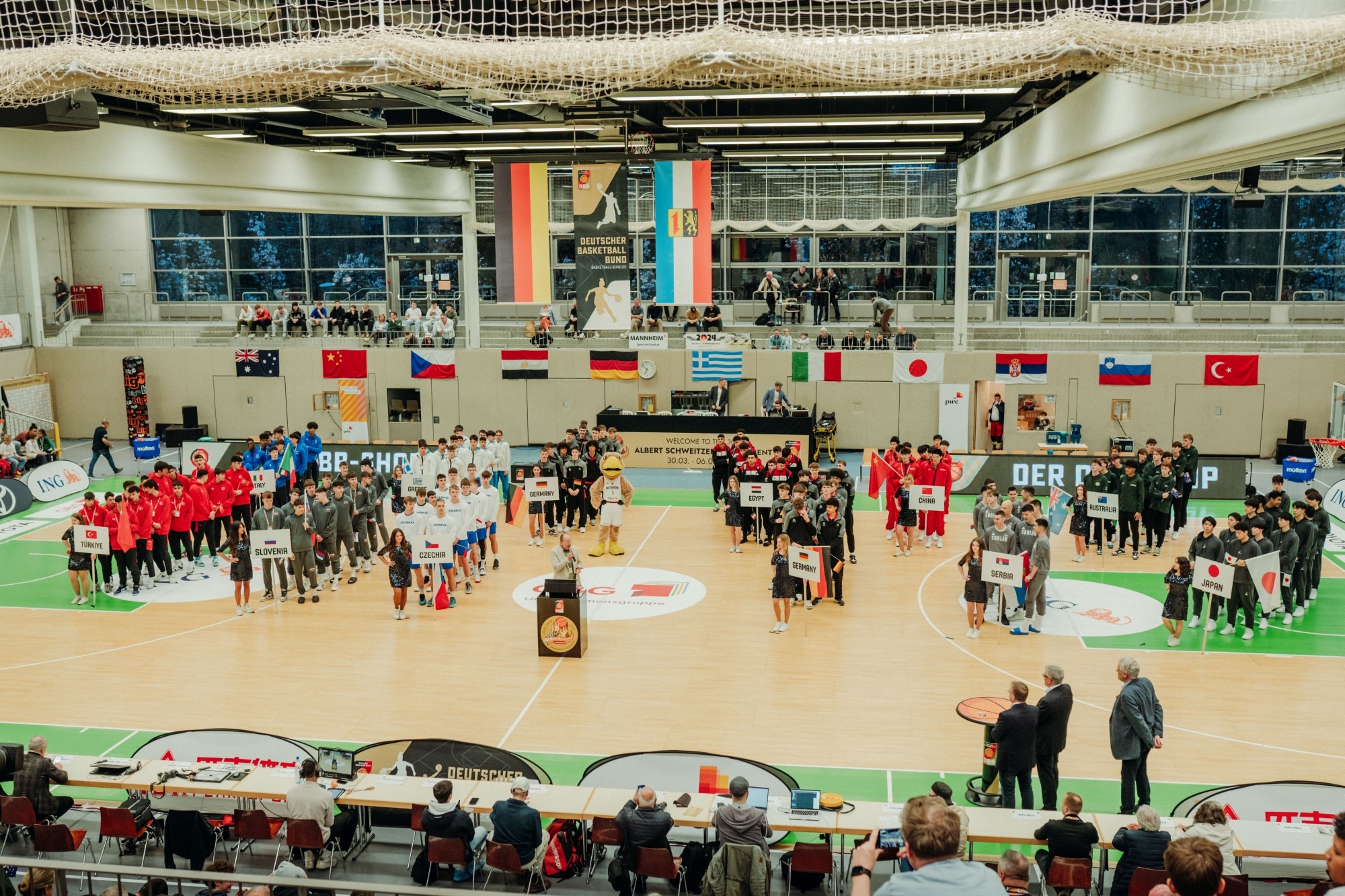
Wenn sich vom 4. bis 11. April 2026 die Türen der Hallen in Mannheim und Viernheim öffnen, ist eines garantiert: Hier spielt die Zukunft des Basketballs. Das traditionsreiche Albert Schweitzer Turnier geht in seine 31. Auflage – und bringt einmal mehr die besten U18-Nationalteams der Welt zusammen (TICKETS). Bühne für die Stars von morgen – Auch Mädchen! Das Turnier gilt seit Jahrzehnten als eines der bedeutendsten Nachwuchs-Events im internationalen Basketball. Namen, die später die große Bühne eroberten, standen hier bereits als Talente auf dem Parkett – von NBA-Pros bis hin zu europäischen Topspielern. Eine besondere Neuerung prägt die diesjährige Ausgabe:  Erstmals sind auch vier internationale U18-Mädchenteams in das Turnier integriert. Damit setzt das Albert Schweitzer Turnier ein starkes Zeichen für die Entwicklung und Sichtbarkeit des weiblichen Nachwuchsbasketballs auf höchstem Niveau. International, hochklassig, elektrisierend Das Turnier verbindet sportliche Qualität mit internationalem Flair. Fans dürfen sich auf intensive Spiele, taktische Raffinesse und pure Leidenschaft freuen. Nationalteams aus aller Welt reisen an – Basketball-Kulturen prallen aufeinander, Spielstile verschmelzen oder konkurrieren. Tempo, Athletik und Emotionen sorgen für eine besondere Atmosphäre, die man so nur im Jugendbereich erlebt: roh, ehrlich und voller Energie. Besonders im Fokus stehen natürlich die deutschen Teams. Vor heimischem Publikum möchte der DBB-Nachwuchs nicht nur mithalten, sondern ein Ausrufezeichen setzen. Mehr als nur Basketball Das Albert Schweitzer Turnier ist nicht nur ein sportliches Highlight, sondern auch ein Treffpunkt der Basketball-Community. Wenn am, kommenden Samstag der erste Sprungball fällt, beginnt mehr als nur ein Turnier – es startet eine Woche voller Geschichten, Überraschungen und vielleicht der ersten Schritte zukünftiger Superstars. Wer Basketball liebt, sollte sich dieses Event nicht entgehen lassen. Denn hier sieht man nicht nur Spiele – hier erlebt man die Zukunft. Alle Spiele im Livestream Rising stars take the stage: The 31st Albert Schweitzer Tournament tips off When the arenas in Mannheim and Viernheim open their doors from April 4 to 11, 2026, one thing is certain: this is where the future of basketball comes to life. The prestigious Albert Schweitzer Tournament returns for its 31st edition, once again bringing together the world’s top U18 national teams (TICKETS). A stage for tomorrow’s stars For decades, the tournament has been one of the most important events in international youth basketball. Many players who once competed here as teenagers have gone on to shine on the biggest stages – from European leagues to the NBA. This year also marks a major step forward: for the first time, four international U18 women’s teams are integrated into the tournament. It’s a strong signal for the growth and visibility of elite women’s youth basketball on an international stage. The event combines elite-level competition with a truly international atmosphere. International, high-level, electrifying National teams from across the globe will compete, bringing together different basketball cultures and playing styles. All eyes will also be on the German teams. Playing in front of a home crowd, they aim to make a real statement. More than just basketball The Albert Schweitzer Tournament is more than a sporting event – it’s a gathering point for the global basketball community. When the opening tip goes up, it marks the start of more than just a tournament – it’s a week full of stories, surprises, and possibly the first steps of future stars. If you love basketball, this is an event you shouldn’t miss. Because here, you don’t just watch the game – you witness the future. All games via livestream

_92A1619_fneb1u

AST 2026: Die „Ones to Watch“ beim Albert Schweitzer Turnier Part 2

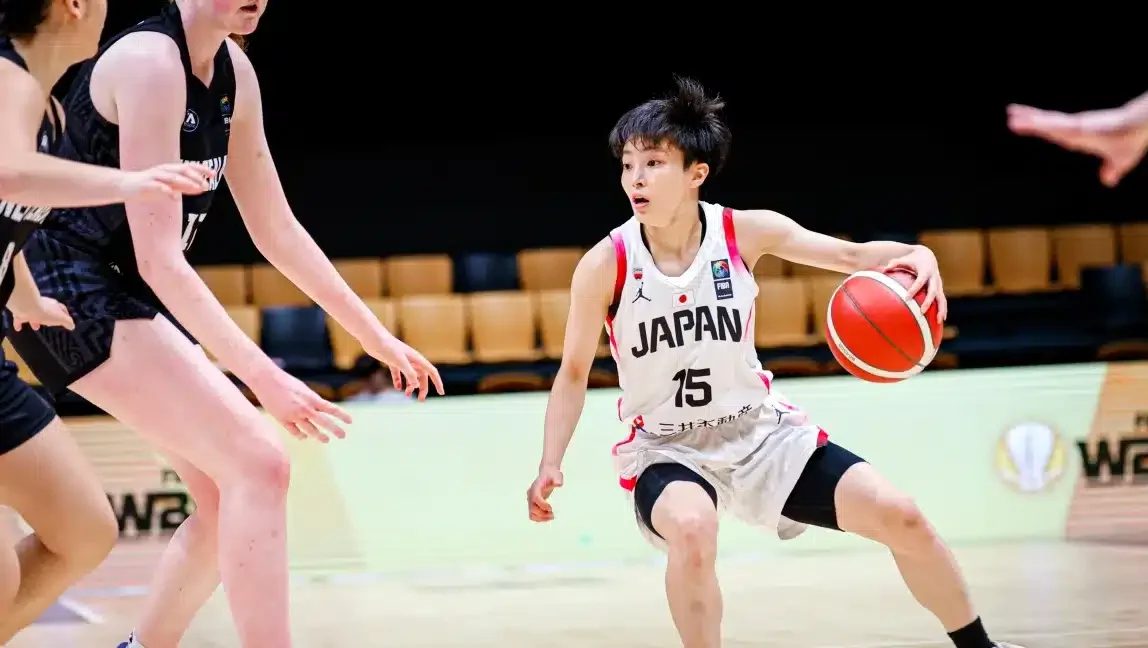
Am Samstag, 04. April 2026 startet das 31. Albert Schweitzer Turnier in Mannheim/Viernheim. Mit dabei zwölf Nationen aus vier Kontinenten und jede Menge junge Talente der jeweiligen U17- und U18-Bereiche. Wir haben die Roster der Teilnehmer genauer unter die Lupe genommen und einige vielversprechende Spieler ausfindig gemacht, die beim AST für Aufsehen sorgen könnten. Im zweiten Part schauen wir auf das Vier-Nationen-Turnier der Mädchen. The 31st Albert Schweitzer Tournament kicks off on Saturday, April 4, 2026, in Mannheim/Viernheim. Twelve nations from four continents will be competing, along with plenty of young talent from the U17 and U18 age groups. We’ve taken a closer look at the participating teams’ rosters and identified some promising players who could make a splash at the AST. In the second part, we’ll take a look at the girls’ Four Nations Tournament. Weibliche Talente/ female prospects Mia Wiegand (Germany) Die 17-Jährige überzeugt sowohl national als auch international. In der vergangenen WNBL-Saison wurde sie zum MVP gekürt, und auch in der aktuellen Saison liefert sie starke Leistungen ab: Mit ihrem Team, den QOOL Sharks Würzburg, hat sie bereits das Halbfinale erreicht. Auch im Adler-Dress konnte sie sich bereits beweisen. Im letzten Jahr zeigte sie direkt bei zwei Turnieren, das sie zu den Top-Nachwuchsspielerinnen Europas gehört. Zuerst gewann sie mit Deutschland beim EYOF Silber. Bei der U16 EuroBasket 2025 ein paar Wochen später brachte sie als Top-Scorerin mit einem Punktedurchschnitt von 15,1 Punkten die U16-Mädchen zur Bronze-Medaille und konnte sich außerdem einen Platz in den All-Star Five des Turniers sichern. Durch diesen Erfolg konnten sich die Mädchen für die U17 WM in diesem Jahr qualifizieren. The 17-year-old is making a name for herself both nationally and internationally. She was named MVP in the last WNBL season, and she’s continuing to deliver strong performances this season as well: With her team, the QOOL Sharks Würzburg, she has already reached the semifinals. She has also proven herself playing for the national team. Last year, she demonstrated in two tournaments that she is among Europe’s top young players. First, she won silver with Germany at the EYOF. A few weeks later, at the 2025 U16 EuroBasket, she led the U16 girls to a bronze medal as the top scorer with an average of 15.1 points per game and also secured a spot on the tournament’s All-Star Five. Thanks to this success, the girls qualified for this year’s U17 World Championship. Miya Takeuchi (Japan) Die 1,61 m große Japanerin gehört zu den Top-Talenten aus Asien. Gegen ihre meist größeren Gegenspielerin kann sie sich vor allem mit Geschwindigkeit und Ballhandeling durchsetzen. Beim U16 Asia Cup 2025 konnte sie als Topscorerin mit 19,4 Punkten und 6,6 Assists im Durchschnitt das Turnier dominieren und wurde so am Ende als MVP ausgezeichnet. Vor allem im Spiel um Bronze gegen China überzeugte sie. Mit 25 Punkten, sieben Rebounds und vier Assists konnte sie das Spiel für Japan entscheiden und so die Bronzemedaille sichern. Auch Miya Takeuchi wird man im Sommer mit Japan bei der U17 WM in Tschechien sehen. The 5’3″ Japanese player is one of Asia’s top talents. Against her opponents, who are usually taller, she stands out primarily for her speed and ball-handling skills. At the 2025 U16 Asia Cup, she dominated the tournament as the leading scorer, averaging 19.4 points and 6.6 assists, and was ultimately named MVP. She was particularly impressive in the bronze medal game against China. With 25 points, seven rebounds, and four assists, she sealed the victory for Japan and secured the bronze medal. Miya Takeuchi will also be competing with Japan at the U17 World Championship in the Czech Republic this summer. Marianna Zanetti (Italy) Die 1,89 m große Center-Spielerin spielt schon seit drei Jahren für die italienischen Nachwuchsteams. Ihr Debüt gab sie 2023 bei der U16 Women’s EuroBasket, wo sie in einem knappen Spiel um Platz 3 gegen Finnland Bronze gewinnen konnte. Im Folgejahr konnte sie bei der U16-EM mehr Verantwortung übernehmen und glänzte als eine der Topscorerin und Top-Rebounderin (10,3 Punkte und 6,7 Rebounds). 2025 bei der U18 EuroBasket gehörte sie in der Rotation zwar nicht zu den Schlüsselspielerinnen, kam aber trotzdem auf ihre Minuten und holte vier Punkte im Durchschnitt. In der italienischer Serie A2 spielt sie bei Faenza Basket Project, wo sie in dieser Saison durchschnittlich auf 20 Minuten Einsatzzeit und 7,1 Punkte kommt. The 6-foot-2 center has been playing for Italian youth teams for three years. She made her debut in 2023 at the U16 Women’s EuroBasket, where she helped secure the bronze medal in a close third-place game against Finland. The following year, she took on more responsibility at the U16 European Championship and shone as one of the top scorers and top rebounders (10.3 points and 6.7 rebounds). At the 2025 U18 EuroBasket, she wasn’t among the key players in the rotation, but still got her minutes and averaged four points. In the Italian Serie A2, she plays for Faenza Basket Project, where she is averaging 20 minutes of playing time and 7.1 points this season.

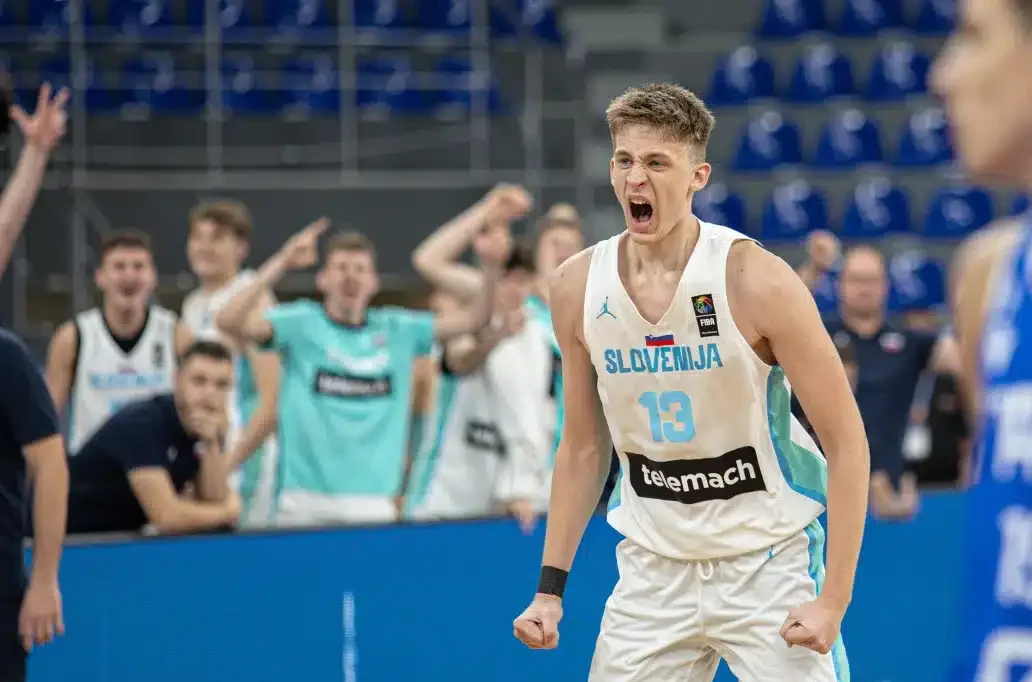
Jarc_Action_2

AST 2026: Die „Ones to Watch“ beim Albert Schweitzer Turnier Part 1

Am Samstag, 04. April 2026 startet das 31. Albert Schweitzer Turnier in Mannheim/Viernheim. Mit dabei zwölf Nationen aus vier Kontinenten und jede Menge junge Talente der jeweiligen U17- und U18-Bereiche. Wir haben die Roster der Teilnehmer genauer unter die Lupe genommen und einige vielversprechende Spieler ausfindig gemacht, die beim AST für Aufsehen sorgen könnten. The 31st Albert Schweitzer Tournament kicks off on Saturday, April 4, 2026, in Mannheim/Viernheim. Twelve nations from four continents will be competing, along with plenty of young talent from the U17 and U18 age groups. We’ve taken a closer look at the participating teams’ rosters and identified some promising players who could make a splash at the AST. Männliche Talente/ male prospects Lukas Novakovic (Sweden) Der agile Guard erzielte für die schwedischen U18-Jungen knapp 17 Punkten bei der EuroBasket 2025. Zwar stiegen die Skandinavier mit nur einem Turniersieg sang- und klanglos ab, was Novakovic‘ persönliche Leistungen aber nicht schmälerte. Er gehörte zu den fünf besten Scorern des Turniers und brachte mit 1,96 m auch gute athletische Fähigkeiten mit. Zudem gehörte er mit über sieben Dreiern pro Spiel zu den Ballermännern des Turniers und traf immerhin 36% seiner Distanzwürfe. Auf Vereinsebene steht der noch 17-Jährige beim schwedischen Erstligisten Södertälje unter Vertrag und kommt im Schnitt auf knapp vier Punkte pro Spiel. The agile guard scored nearly 17 points per game for the Swedish U18 team at EuroBasket 2025. Although the Scandinavians were eliminated without much fanfare after winning just one game in the tournament, this did not detract from Novakovic’s individual performance. He was among the top five scorers in the tournament and, at 1.96 m, also demonstrated strong athletic ability. In addition, with over seven three-pointers per game, he was among the tournament’s top shooters and hit 36% of his long-range shots. At club level, the 17-year-old is under contract with the Swedish first-division team Södertälje and averages just under four points per game. Lun Jarc (Slovenia) Der Forward gewann mit der slowenischen U16-Auswahl Bronze bei der EuroBaskest 2025 und verhalf seinem Team mit 27 Punkten in entscheidenden Duell mit Italien zur ersten U16-Medaille in der Verbandshistorie. Für seine Leistungen wurde er zusätzlich zum Turnierallstar gewählt. Jarc misst mit 2,06 m eine beachtliche Länge und Spannweite, die ihn offensiv zu einem gefährlichen Gesamtpaket machen. Bei über vier Versuchen pro Spiel, traf der 17-Jährige knapp 38% und war Sloweniens Topscorer mit 15 Punkten. Mit zusätzlich sechs Rebounds und drei Assists kam ihm einen Schlüsselrolle während des Turniers in Serbien zu. Außerhalb der Nationalmannschaft, finden wir ihn im Kader der serbischen Talentschmiede BC Mega Basket, wo er 11.8 Punkte und 4.4 Rebounds auflegt. The forward won a bronze medal with the Slovenian U16 team at EuroBasket 2025 and helped his team secure the first U16 medal in the federation’s history by scoring 27 points in a decisive match against Italy. He was also named to the All-Tournament Team for his performance. At 6’9”, Jarc possesses impressive height and wingspan, making him a dangerous all-around threat on offense. Averaging over four attempts per game, the 17-year-old shot just under 38% and led Slovenia in scoring with 15 points. With an additional six rebounds and three assists, he played a key role during the tournament in Serbia. Outside of the national team, he plays for the Serbian talent factory BC Mega Basket, where he averages 11.8 points and 4.4 rebounds.  Jamie Edoka (Germany) Zählte trotz seiner erst 17 Jahre bei der U18-EuroBasket 2025 zu den deutschen Leistungsträgern und legte knapp elf Punkte und vier Rebounds auf. Im Vorjahr war der Guard, der bereits BBL-Minuten für die Skyliners sammelte deutscher Topscorer bei der U16-EuroBasket. Bis auf den Dreier, der bei der EM in Serbien kaum fiel, bringt Edoka offensiv wie defensiv Einiges mit. Bei 1,93 m gut gebaut und ein athletisches Monster. Sorgte für einige Highlight-Dunks und wurde zuletzt zum Basketball Without Borders Camp in Los Angeles eingeladen. Kommt in der ProB für die Skyliners auf 17 und in der NBBL auf über 20 Punkte. Edoka war außerdem Teil der NextGen EuroLeague. Despite being only 17 years old, he was one of Germany’s top performers at the 2025 U18 EuroBasket, averaging nearly 11 points and four rebounds. Last year, the guard—who had already logged BBL minutes for the Skyliners—was the top German scorer at the U16 EuroBasket. Aside from the three-pointer, which didnt fall often at the European Championship in Serbia, Edoka brings a lot to the table both offensively and defensively. At 6’4”, he’s well-built and an athletic beast. He delivered several highlight-reel dunks and was recently invited to the Basketball Without Borders camp in Los Angeles. He averages 17 points in the ProB for the Skyliners and over 20 points in the NBBL. Edoka was also part of the NextGen EuroLeague. Ricards Aizpurs (Latvia) Kam letztes Jahr nicht für Lettland zum Einsatz, da man bei der U18 EuroBasket ausschließlich auf Spieler des Jahrgangs 2007 setzte. Im Vorjahr zählte der 2,00 m große Forward bei der U16 EM aber zu den Top-Talenten des Turniers. Mit über 18 Punkten war er der drittbeste Scorer und hievte Lettland auf den siebten Platz, was das beste Finish seit über einer Dekade war. Zudem überzeugte Aizpurs auch defensiv und steuerte 1.3 Steals und 1.1 Blocks bei. Vor kurzem stand der 17-Jährige für das Adidas Next Gen EuroLeague Team aus Bologna auf dem Feld und erzielte starke 18 Punkte pro Spiel. Mit 35% Dreiequote ist Aizpurs auch durchaus aus der Distanz gefährlich. Beim Basketball Without Borders Global Camp zählte er zu den Allstars. He did not play for Latvia last year, as the U18 EuroBasket team relied exclusively on players born in 2007. The previous year, however, the 6-foot-7 forward was among the top talents at the U16 European Championship. With over 18 points per game, he was the third-leading scorer and helped lift Latvia to seventh place, which was the team’s best finish in over a decade. Aizpurs also impressed on defense, contributing 1.3 steals and 1.1 blocks per game. Recently, the 17-year-old took the court for the Adidas Next Gen EuroLeague Team in Bologna, averaging an impressive 18 points per game. With a 35% three-point shooting percentage, Aizpurs is also a threat from beyond the arc. At the Basketball Without Borders Global Camp, he was named to the All-Star team. Andrej Bjelic (Serbia) Der Guard, der bei Real Madrid unter Vertrag steht, dominierte die U16 EuroBasket in 2024. Für die serbische Auswahl, die das Turnier mit Bronze abschloss erzielte er die meisten Punkte aller Spieler und gehörte zu den zehn besten Reboundern. Logischerweise wurde der 1,94 m große Spielmacher ins Team des Turniers gewählt. Als besonders beeindruckend bewies sich Bjelic beim Dreier, was 2024 auch Deutschland zu spüren bekam. Sechs von 15 Würfen aus der Distanz versenkte er gegen das DBB-Team. Über das Turnier waren es bei über acht Versuchen pro Spiel mehr als 37% Trefferquote. Bei den Königlichen erzielt der Guard in der U22 Liga zehn Punkte, bei etwas über drei Rebounds und Assists. The guard, who is under contract with Real Madrid, dominated the 2024 U16 EuroBasket. Playing for the Serbian national team, which finished the tournament with a bronze medal, he led all players in scoring and ranked among the top ten rebounders. Unsurprisingly, the 6-foot-4 playmaker was named to the All-Tournament Team. Bjelic proved particularly impressive from three-point range, a fact Germany also experienced in 2024. He sank six of 15 shots from beyond the arc against the DBB team. Over the course of the tournament, he shot over 37% from three-point range, averaging more than eight attempts per game. With Real Madrid, the guard averages ten points, just over three rebounds, and three assists in the U22 League. Darius Karutasu (Türkiye) Beendete die letzte U16-EuroBasket auf dem achten Tabellenplatz. War Führungsspieler und erzielte über das Turnier 12.7 Punkte und über sieben Rebounds. Mit vier Dreiern pro Spiel auch durchaus mit Shooting-Fähigkeiten und 1.6 Steals defensiv aktiv. Der knapp 2.00 m große Shooting Guard steht bei der U19 von Anadolu Efes unter Vertrag und nahm am Adidas NextGen Tournament teil. Im Ligabetrieb steht Karutasu bei 17 Punkten und 6.8 Rebounds. Finished the last U16 EuroBasket in eighth place. He was a key player, averaging 12.7 points and over seven rebounds throughout the tournament. With four three-pointers per game, he also possesses solid shooting skills and is active on defense with 1.6 steals. The nearly 6-foot-7 shooting guard is under contract with the U19 team of Anadolu Efes and participated in the Adidas NextGen Tournament. In league play, Karutasu is averaging 17 points and 8.8 rebounds. Jackson Ball (New Zealand) Der 1,91 m große Guard stand sowohl im neuseeländischen Aufgebot bei der U17 WM 2024 sowie der U19 WM 2025. Während es Ball 2024 bei wenig Spielzeit mit den „All Blacks“ auf den vierten Platz schaffte, war sein Impact im Folgejahr deutlich größer. Als einziger Spieler des Jahrgangs 2008 kam Ball auf zehn Punkte und drei Rebounds im Schnitt. Am Ende des Turniers reichte es wie im Vorjahr knapp nicht für eine Medaille und man wurde Vierter. Eine trotzdem sehr beachtliche Leistung der Neuseeländer. Abseits der Jugendturniere sammelte Ball schon Erfahrung im A-Kader und kam sowohl in den Qualifikationsspielen für den Asia Cup als auch den des World Cup. Für die Hawke’s Bay Hawks läuft Ball in der NBL auf, kommt dort aber nur auf sporadische Minuten. The 6-foot-3 guard was a member of the New Zealand squad for both the 2024 U17 World Cup and the 2025 U19 World Cup. While Ball helped the “All Blacks” finish in fourth place in 2024 despite limited playing time, his impact was significantly greater the following year. As the only player born in 2008, Ball averaged ten points and three rebounds. At the end of the tournament, just like the previous year, they narrowly missed out on a medal and finished fourth. Nevertheless, it was a very impressive performance by the New Zealanders. Outside of youth tournaments, Ball has already gained experience with the senior national team, appearing in both the Asia Cup and World Cup qualifiers. Ball plays for the Hawke’s Bay Hawks in the NBL, but sees only sporadic minutes there. Mathias Vazquez (Brazil) Mit 2,06 m ist der Forward einer der spannendsten Talente Süd-Amerikas. Zuletzt legte Vazquez beim U18 Ameri Cup 2024 zwölf Punkte sowie fünf Rebounds und drei Assists auf. Zudem kam der 18-Jährige, der abseits der Nationalmannschaft für Overtime Elite spielt und vorher in der zweiten Liga in Spanien unterwegs war, schon auf erste Minuten in der A-Nationalmannschaft. Bei der kürzlich ausgetragenen U17 Südamerika Meisterschaft, die Brasilien gewinnen konnte, kam Vazquez nicht zum Einsatz. At 6 feet 9 inches, the forward is one of South America’s most exciting prospects. Most recently, Vazquez recorded 12 points, five rebounds, and three assists at the 2024 U18 Ameri Cup. In addition, the 18-year-old—who plays for Overtime Elite outside of the national team and previously competed in Spain’s second division—has already seen his first minutes with the senior national team. Vazquez did not see any playing time at the recently concluded U17 South American Championship, which Brazil won. Thomas Acunzo (Italy) Stand als einziger 2008er im Kader der U18-Nationalmannschaft bei der abgelaufenen EuroBasket und holte mit Italien Bronze. Der Big-Men stand dabei gut 18 Minuten auf dem Court und legte vier Punkte und sieben Rebounds auf. Zudem bestach er mit 1.3 Blocks pro Spiel. Im Jahr zuvor belegte der 2,07 m große Center mit der italienischen U16 bei der EuroBasket den fünften Platz. Mit über zehn Rebounds ging Acunzo als bester Rebounder aus dem Turnier. Abseits dessen legte der 17-Jährige sieben Punkte sowie jeweils 1.9 Assists und Blocks. In der Italy NextGen Liga spielt Acunzo für Cantu. Bei elf Punkten und sieben Rebounds im Schnitt konnte der BWB-Teilnehmer auch auf Vereinsebene seinen Wert unterstreichen. He was the only player born in 2008 on the U18 national team roster at the recent EuroBasket and won a bronze medal with Italy. The big man spent a solid 18 minutes on the court, scoring four points and grabbing seven rebounds. He also impressed with 1.3 blocks per game. The previous year, the 6-foot-9 center finished fifth with the Italian U16 team at EuroBasket. With over ten rebounds, Acunzo emerged as the tournament’s top rebounder. Beyond that, the 17-year-old averaged seven points, 1.9 assists, and 1.9 blocks. In the Italy NextGen League, Acunzo plays for Cantu. Averaging 11 points and seven rebounds, the BWB participant also demonstrated his value at the club level.

alan website

„Wir haben gute Spieler und viel Talent“

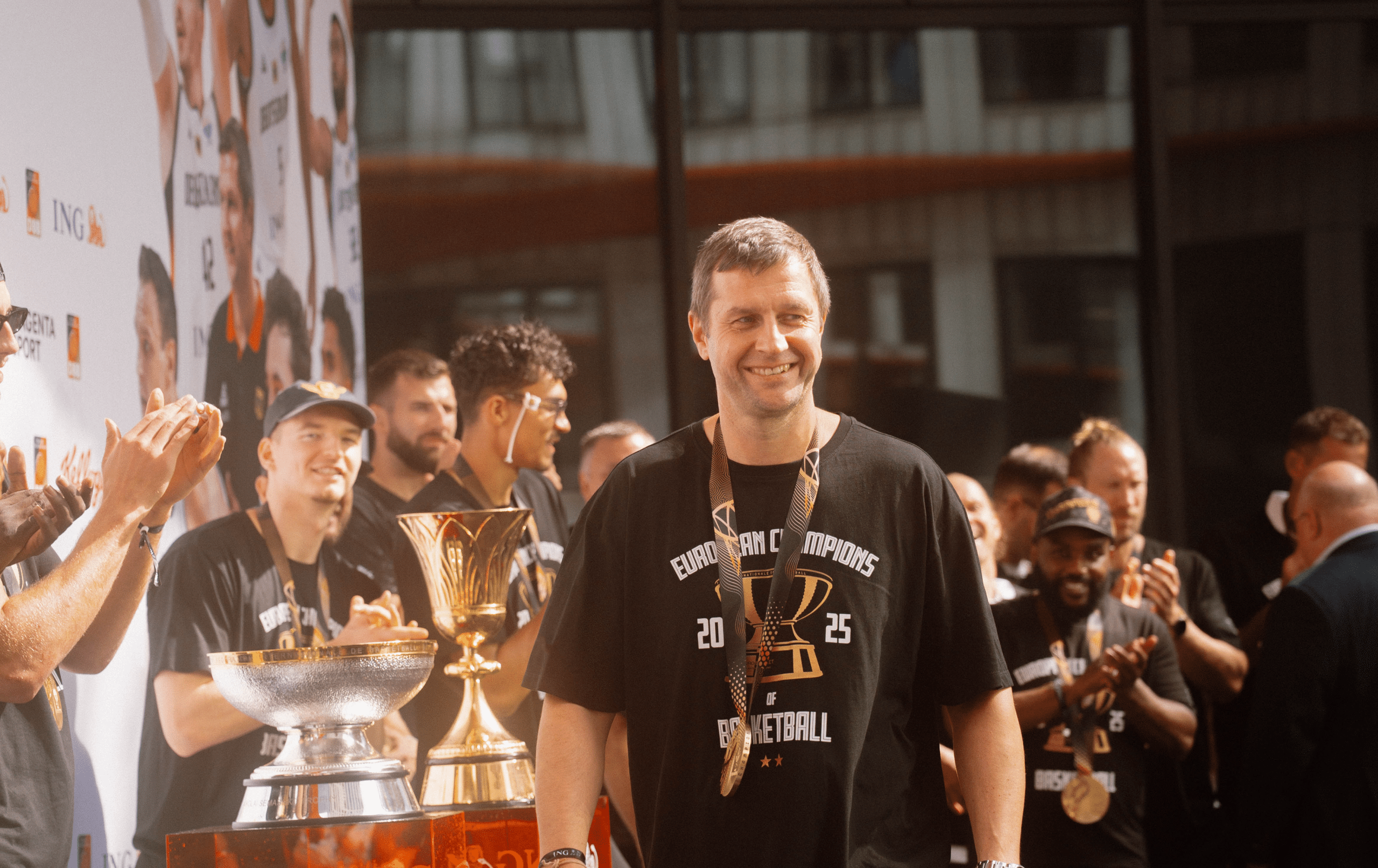
Vom 4. – 11. April findet das diesjährige Albert Schweitzer Turnier (AST) in Mannheim und Viernheim statt. Die U18-Jungen treten dort gegen Gegner aus der Welt an. In Gruppe A mit Deutschland sind Bahrain, Japan, Schweden, Slowenien und die Türkei. Für Bundestrainer Alan Ibrahimagic ist es schon das vierte Albert Schweitzer Turnier als Trainer. Im Interview spricht er über die Besonderheit des AST, den wachsenden Druck und die internationalen Gegner. __________________________ This year’s Albert Schweitzer Tournament (AST) will take place in Mannheim and Viernheim from April 4–11. The U18 boys’ team will face opponents from around the world . Group A, which includes Germany, features Bahrain, Japan, Sweden, Slovenia, and Turkey. For Head Coach Alan Ibrahimagic, this marks his fourth Albert Schweitzer Tournament as a coach. In this interview, he discusses what makes the AST special, the growing pressure, and the international opponents. Alle Informationen zum AST 2026 Das ist dein viertes Jahr als Coach der U18 Mannschaft. Was bedeutet das AST für dich und für den Basketballnachwuchs in Deutschland? Für mich ist es immer etwas Besonderes, ein Turnier im eigenen Land zu spielen. Mittlerweile gibt es zwar auch öfter Erwachsenen-Turniere in Deutschland, wie dieses Jahr die Damen-WM in Berlin, Jugend-Turniere sind aber noch nicht so stark vertreten. Das macht das AST immer besonders. Auch für die Spieler ist es etwas Besonderes. Sie wissen, welche bekannten Gesichter schon beim AST gespielt haben. Außerdem sind viele Länder aus den verschiedensten Kontinenten dabei, was für die Jungs immer aufregend ist. Das AST hast du 2018 schon einmal als Trainer gewonnen. Was sind eure Ziele für dieses Jahr? Das ist immer schwer zu sagen, weil man die anderen Mannschaften noch nicht kennt. Für uns ist es auch eine Vorbereitung auf den Sommer. Zunächst geht es darum, als Team gut zusammenzukommen und zu lernen. Unser Ziel ist es, die Zeit und die Herausforderungen zu genießen und das heimische Publikum mit unserem Basketball zu begeistern. Trotzdem muss man sagen, dass der Druck mit der Zeit auf jeden Fall wächst. Nach drei erfolgreichen Turnieren geht man mit bestimmten Ansprüchen ins vierte. Erzähl uns etwas über deine Mannschaft.  Als Team kennen wir uns noch nicht. Ich kenne die Spieler einzeln, und einige von ihnen kennen sich auch schon untereinander. Wir haben auf jeden Fall gute Spieler und viel Talent. Da die meisten Jungs noch nie mit mir zusammengearbeitet haben, geht es erstmal darum, dass wir uns kennenlernen und schauen, wie wir miteinander spielen. __________________________ This is your fourth year as coach of the U18 team. What does the AST mean to you and to the next generation of basketball players in Germany? For me, it’s always special to play a tournament in my own country. While there are now more adult tournaments in Germany—like this year’s Women’s World Cup in Berlin—youth tournaments aren’t as common yet. That’s what makes the AST so special. It’s also special for the players. They know which famous faces have played in the AST before. Plus, many countries from all over the world are participating, which is always exciting for the guys. You already won the AST as a coach in 2018. What are your goals for this year? That’s always hard to say because you don’t know the other teams yet. For us, it’s also preparation for the summer. First and foremost, it’s about coming together as a team and learning. Our goal is to enjoy the time and the challenges and to thrill the home crowd with our basketball. Still, it has to be said that the pressure definitely grows over time. After three successful tournaments, you go into the fourth with certain expectations. Tell us a little about your team. We don’t know each other very well as a team yet. I know the players individually, and some of them already know each other. We definitely have good players and a lot of talent. Since most of the guys have never worked with me before, the first step is for us to get to know each other and see how we play together. Was sagst du zu den Gegnern in der Vorrunde? Wie die Teams genau aussehen, weiß man immer erst kurz vor Turnierbeginn. Da es sich um die laufende Saison handelt, ist unklar, ob die besten Spieler der Mannschaften teilnehmen. Es sind auf jeden Fall einige gute Teams dabei. Die europäischen Teams sind ja bekannt. Italien und Serbien gehören in den Jahrgängen zu den Besten, Slowenien und Lettland haben ebenfalls gute Spieler. Ich bin gespannt auf die Teams, von denen man nicht so viel mitbekommt, wie bei den EMs im Sommer. Neuseeland hat sich beim AST auch schon gut geschlagen. Brasilien war seit 16 Jahren nicht dabei, aber man hört viel über deren neue Generation im Basketball. Darauf freue ich mich. Aber auch China investiert in diesem Jahrgang viel in Basketball. Diese internationalen Begegnungen sind es, die das AST zu dem machen, was es ist, und deshalb ist es so besonders. Du hattest ja einen ziemlich aufregenden Sommer letztes Jahr. Erst Silber bei der U19 WM als Trainer und dann Europameister mit der Herren-Nationalmannschaft. Worauf freust du dich in diesem Sommer? Grundsätzlich freue ich mich immer auf den Sommer, denn das ist quasi meine Hauptsaison. Es ist für mich eine neue Generation mit vielen neuen Gesichtern. Ich hoffe, dass wir beim AST schon Schritte nach vorne machen können, auf die wir im Sommer aufbauen können. Und natürlich hoffe ich auch, dass wir alle gemeinsam Spaß daran haben werden. __________________________ What do you think of the opponents in Group A? You never really know exactly what the teams will look like until just before the tournament starts. Since this is during the current season, it’s unclear whether the teams’ best players will be participating. There are definitely some good teams in the mix. The European teams are well-known, of course. Italy and Serbia are among the best in their age groups, and Slovenia and Latvia also have good players. New Zealand has already performed well in the past at the AST. Brazil hasn’t participated in 16 years, but there’s a lot of buzz about their new generation of basketball players. I’m looking forward to that. China is also investing heavily in basketball in this age group. It’s these international matchups that make the AST what it is, and that’s why it’s so special. You had a pretty exciting summer last year. First, silver at the U19 World Cup as a coach, and then European champion with the men’s national team. What are you looking forward to this summer? I always look forward to summer because that’s basically my main season. For me, it’s a new generation with lots of new faces. I hope that we already take steps forward at AST that we can build on in summer. And of course, I also hope that we’ll all have fun doing it together.

DBB_Damen_Training_260305_Frankfurt_Demirel-156

„Den ersten Schritt zu machen, ist großartig!“

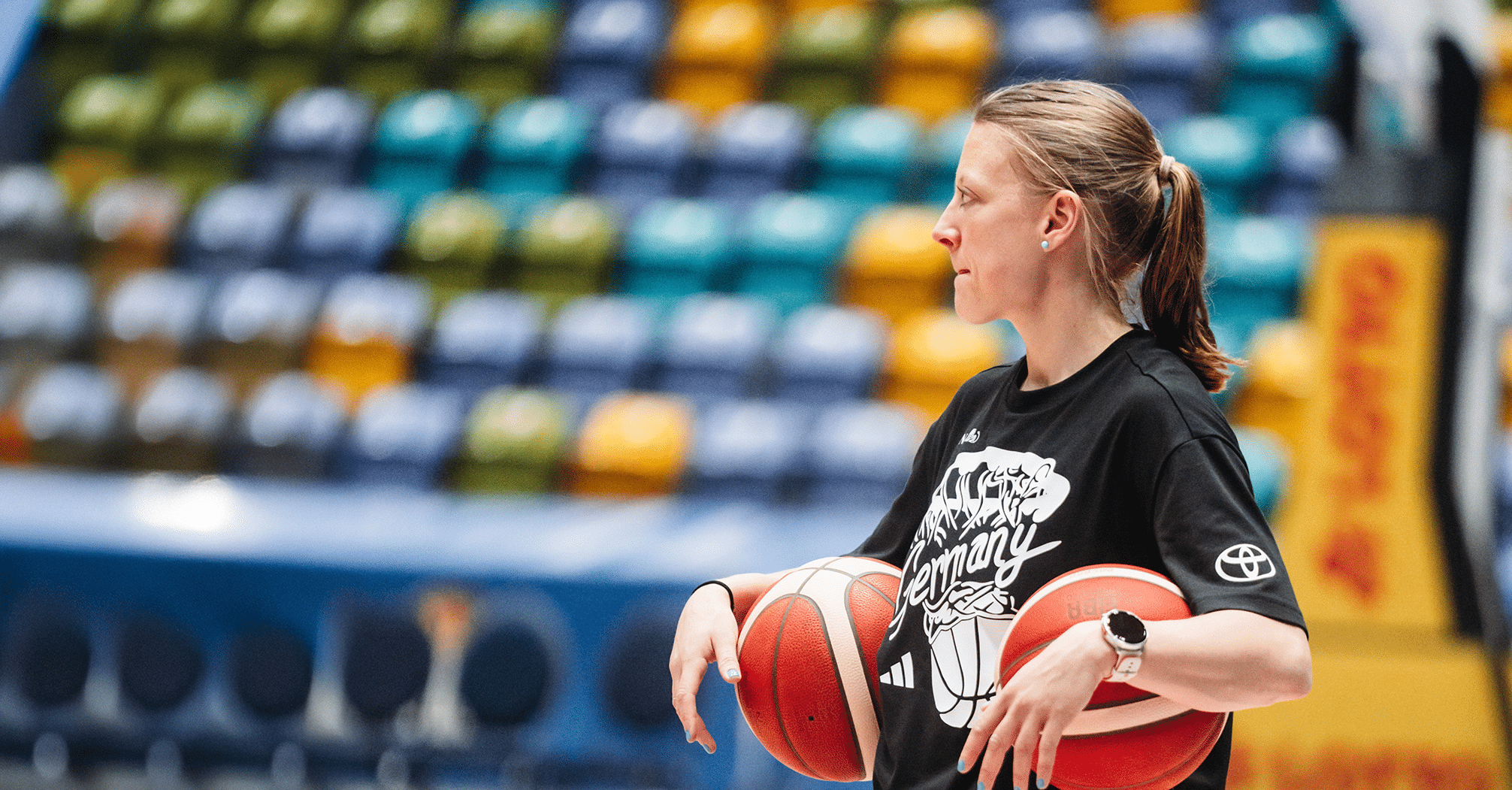
Vom 4. – 11. April findet das diesjährige Albert Schweitzer Turnier (AST) in Mannheim und Viernheim statt. Dieses Jahr mit einer Neuerung, denn zum ersten Mal treten auch die U18-Mädchen an. In einem 4-Nations-Turnier spielen sie gegen Italien, Serbien und Japan. Im Vorab haben wir mit Bundestrainerin Constanze Wegner über das Debüt beim AST für sie und die Mädchen, die Erfahrungen als Bundestrainerin und die Erwartungen an das Turnier gesprochen. Gemeinsam mit Bundestrainer Heiko Czach wird sie die Mädchen beim AST trainieren. __________________________ This year’s Albert Schweitzer Tournament (AST) will take place in Mannheim and Viernheim from April 4–11. This year brings a new addition, as the U18 girls’ team will be competing for the first time. In a four-nation tournament, they will face Italy, Serbia, and Japan. Ahead of the event, we spoke with Head Coach Constanze Wegner about the AST debut for her and the girls, her experiences as a Head Coach, and her expectations for the tournament. Together with Head Coach Heiko Czach, she will coach the girls at the AST.   Alle Informationen zum AST 2026 Dein erstes Albert Schweitzer Turnier. Weißt du was auf dich zukommst?  Da es für die Mädels das erste Mal ist und der Umfang, sowohl was die Teams als auch den Spielplan betrifft, geringer ist als bei den Jungs, weiß ich nicht so genau, was auf mich zukommt. Da ich aber schon den einen oder anderen Sommer mit der Natio hatte, ist es so, als hätte man eine Woche Vorbereitung und dann das erste Turnier in der Vorbereitung. Hier ist der Stellenwert natürlich ein bisschen höher, weil man weiß, wie viel das Turnier für die Jungs bedeutet. Wir wollen uns gerne im Damenbereich etablieren und entsprechend eine Leistung abliefern, die das unterstreicht. Damit dann alle von organisatorischer Seite sagen: Ja, das hat sich gelohnt. Das ist auf jeden Fall etwas, das wir langfristig etablieren wollen, auch im weiblichen Bereich. Warst du schonmal vorher dabei als Zuschauerin?  Ich habe noch nie ein Albert Schweitzer Turnier live gesehen. Das hat sich bisher wegen der Saisonanbindung und der Spieltage nie ergeben, aber was das im männlichen Bereich bedeutet, kriegt man auch so mit. Wir freuen uns deshalb sehr, dass wir dabei sein dürfen. Es ist nicht nur dein Debüt, sondern auch für die Mädels. Zum ersten Mal spielt eine Mädchenmannschaft beim AST. Wie fühlt es sich an Teil dieses Schrittes zu sein? Gerade jetzt als Pioniergruppe den ersten Schritt zu machen, ist großartig. Das ist natürlich eine Ehre und gleichzeitig auch eine Aufgabe. Wir wollen so gut wie möglich abliefern, um den Grundstein zu legen, sodass das Turnier langfristig wachsen kann und wir es auch im weiblichen Bereich spielen können. Alle kennen den Stellenwert dieses Turniers bei den Jungs, und diese Chance zu bekommen, es auch bei den Mädchen zu etablieren, ist natürlich großartig. __________________________ Your first Albert Schweitzer Tournament. Do you know what to expect? Since it’s the girls’ first time and the scale—both in terms of the teams and the schedule—is smaller than for the boys, I’m not quite sure what to expect. But since I’ve already spent summers with the national team, it’s like having a week of preparation and then the first tournament of the preseason. Of course, the stakes are a bit higher here because you know how much the tournament means to the guys. We’d like to establish ourselves in the women’s division and deliver a performance that underscores that. So that everyone on the organizational side says: Yes, it was worth it. That’s definitely something we want to establish in the long term. Have you ever been to an AST before? I’ve never seen an Albert Schweitzer Tournament live. It never worked out so far because of the timing of the season and the match days, but you still get a sense of what it means in the men’s division. That’s why we’re really excited to be able to participate. It’s not just your debut, but the girls’ as well. This is the first time a girls’ team is playing in the AST. How does it feel to be part of this milestone? Taking the first step as a pioneering group right now is fantastic. It’s an honor, of course, but also a responsibility. We want to perform as well as possible to lay the groundwork so the tournament can grow in the long term and we can play it in the women’s division too. Everyone knows how important this tournament is for the boys, and getting this chance to establish it for the girls as well is, of course, fantastic. Du bist ja seit letztem Jahr Bundestrainerin und hast die EM mit den U20 Damen gecoacht. Was nimmst du aus deiner Arbeit letztes Jahr mit in die Arbeit mit der U18? Klar nimmt man einige Dinge aus dem letzten Sommer mit. Ich glaube aber auch, dass diese Situation jetzt etwas Besonderes ist, weil wir natürlich jetzt schon Dinge versuchen, auf die im Sommer aufgebaut werden kann. Dazu werden auch schon Absprachen mit Janet Fowler-Michel im Rahmen des Möglichen getroffen. Damit es im Sommer keine komplett andere Sache ist. Außerdem ist es natürlich eine deutlich kürzere Vorbereitungszeit als im Sommer. Die Anspannung ist vielleicht auch einen Ticken größer, weil man direkt in das Turnier startet, bei dem es um die Wurst geht, und nicht erst einmal in Testspiele. Was wünscht du dir, dass am Ende des AST über deine Mannschaft gesagt wird? Dass es Spaß gemacht hat den Mädels zuzuschauen, dass es so aussah als hätten die Mädels Spaß gehabt das erste Mal dieses Turnier zu spielen. Dass es grundsätzlich so aussah, als hätten die Mädels Spaß gehabt gemeinsam diese Aufgabe anzugehen und sich auch damit für den bevorstehenden Sommer vorzubereiten. Und dass sie, und davon bin ich auch überzeigt, weil dafür kennt man die Mädels jetzt auch, Deutschland gut repräsentiert haben. Und dass sie sich auf jeden Fall verdient haben, dass es dieses Turnier langfristig auch im weiblichen Bereich gibt, mit der Leistung die sie da gezeigt haben. Was sagst du zu den Gegnerinnen (Serbien, Japan, Italien)? Es warten drei Spiele gegen drei richtig coole Gegner auf uns. Darauf freuen wir uns extrem. Gerade auch auf Japan, ein Team, gegen das man nicht jedes Jahr die Möglichkeit hat zu spielen, freuen wir uns sehr. Das ist quasi ein neuer Gegner, was natürlich super cool ist. Dann sind da noch Italien und Serbien. Das sind immer gute Teams im weiblichen Bereich, die immer solide spielen. Gegen die muss man sich schon abarbeiten, um gut auszusehen. Und deswegen ist es natürlich super. __________________________ You’ve been a Head Coach since last year and coached the U20 women’s team at the EuroBasket. What lessons from your work last year are you bringing to your work with the U18 team? Of course, there are some things I’m taking with me from last summer. But I also believe that this situation is a bit special right now, because we’re already trying to build a foundation that we can build on in the summer. We’re already coordinating with Janet Fowler-Michel as much as possible to ensure it isn’t a completely different situation in summer. Plus, the preparation time is obviously much shorter than in summer. The pressure might also be a bit higher because we’re jumping straight into the tournament where it really counts, rather than starting with friendly matches. What do you hope people will say about your team at the end of the AST? That it was fun to watch the girls, that it looked like they had fun playing in this tournament for the first time. That, overall, it looked like they had fun tackling this challenge together and using it to prepare for the upcoming summer. And that they—and I’m convinced of this, because that’s what we know about these girls already—represented Germany well. And that they definitely earned the right for this tournament to continue in the women’s division in the long term, given the performance they put on there. What do you think of the opponents (Serbia, Japan, Italy)? We have three matches ahead of us against three really tough opponents. We’re really looking forward to them. We’re especially excited about Japan—a team we don’t get the chance to play every year. They’re practically a new opponent, which is obviously awesome. Then there’s Italy and Serbia. They’re always strong teams in women’s basketball, and they always play solidly. You really have to work hard against them to look good. And that’s why it’s so great, of course.

q7is7v86hrp1fqkf9fr9

U18-Jungen für Albert Schweitzer Turnier nominiert

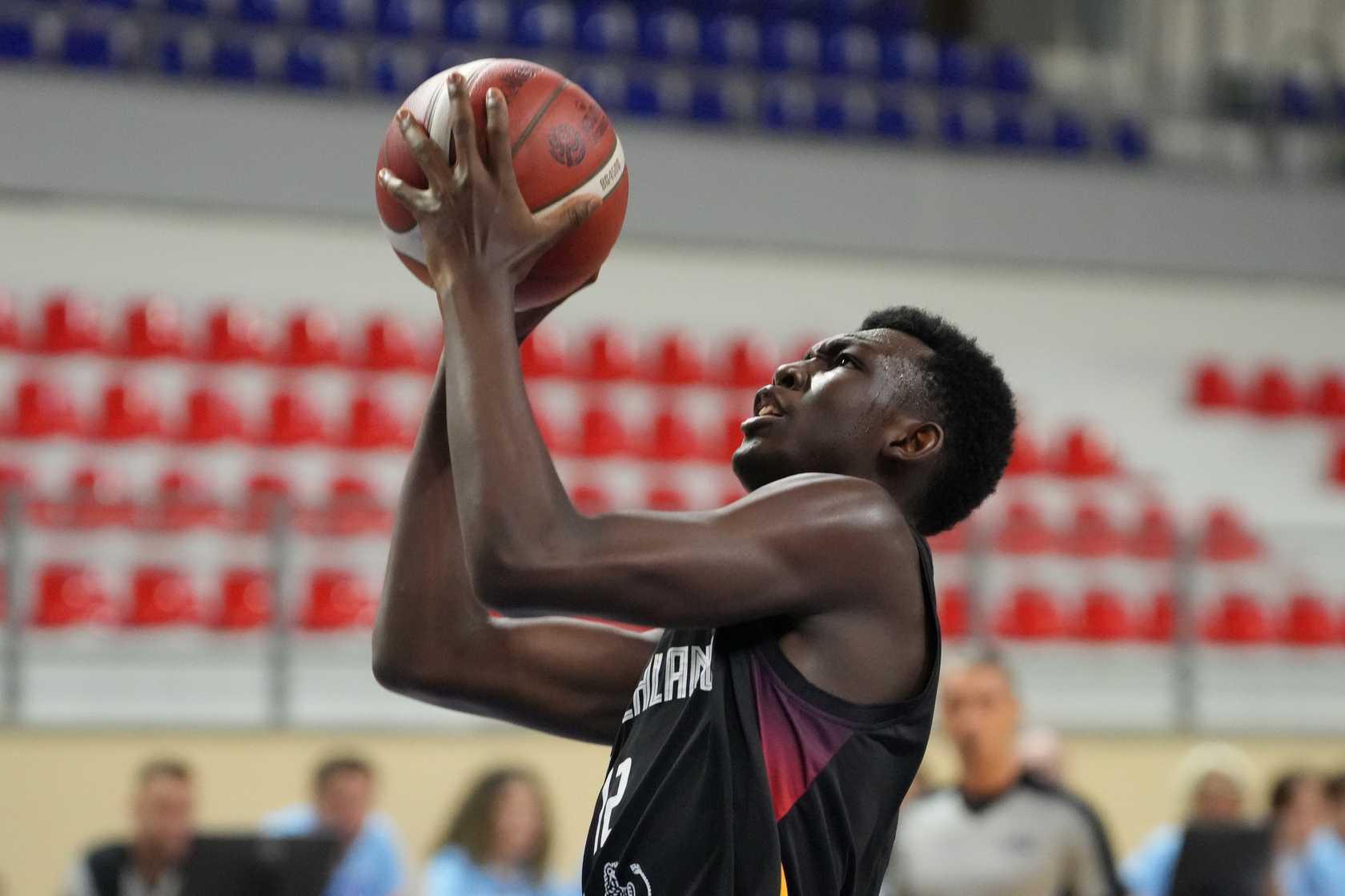
Vom 4. – 11. April findet das diesjährige Albert Schweitzer Turnier (AST) in Mannheim und Viernheim statt (Tickets gibt es hier). Die U18-Jungen treffen dort in Gruppe A auf Bahrain, Slowenien, Japan, Schweden und die Türkei. Hierfür wurden von Bundestrainer Alan Ibrahimagic folgende 17 Spieler nominiert: – Lucai Anderson (Trinity Christian High School/USA) – Fin Borczanowski (ALBA Berlin/LOK BERNAU) – Lars Danziger (Porsche BBA Ludwigsburg) – William Dopfer (Advance Lambert High School/USA) – Kilian Drück (FB Bayern München Basketball) – Jamie Edoka (Eintracht Frankfurt/SKYLINERS) – Moritz Grüß (RASTA Vechta/RASTA Academy) – Dusan Ilic (Telekom Baskets Bonn/Dragons Rhöndorf) – Anton Kemmer (ALBA Berlin/LOK BERNAU) – Felix Kiehlneker (ratiopharm ulm/OrangeAcademy/BBU ‘01 ) – Lukas Klein (ALBA Berlin/LOK BERNAU) – Leonard Kröger (Paderborn Baskets) – Epke Kruthaup (RASTA Vechta/RASTA Academy) – Lars Lenke (Nürnberg Falcons/hapa Ansbach) – Paul Plato (VR-Bank Würzburg Baskets Akademie) – Caspar Vossenberg (FC Bayern München Basketball) – Kenan Youdom (Bild oben, Porsche BBA Ludwigsburg) Das Team wird betreut von Delegationsleiter Werner Lechner, Bundestrainer Alan Ibrahimagic, den Assistant Coaches Kheeryoung Rhee und Dejan Stojanovski, Athletik-Trainer Julian Morche, Teamarzt Thomas Voit, der Physiotherapeut Peter Laskowski und dem Teambetreuer Jan Peter Schlund. Spielplan 4. April 2026 um 20.00 Uhr gegen Bahrain 5. April 2026 um 19.30 Uhr gegen Slowenien 6. April 2026 um 19.30 Uhr gegen Türkei 8. April 2026 um 20.00 Uhr gegen Schweden 9. April 2026 um 20.00 Uhr gegen Japan